article by Craig Hasten
I hope the American people are paying close attention to the what is going on around the globe recently. After 21 years of war in the Middle East it looks like The United States is setting the stage for the next conflict. It was announced yesterday that the CVN 70 Carl Vinson battle group entered the Arabian Sea off the Straits of Hormuz joining the CVN 74 John Stennis battle group which has been in the area for the past two months.
Now riddle me this!

Showing posts with label World News. Show all posts
Showing posts with label World News. Show all posts
Thursday, January 12, 2012

Monday, August 8, 2011
A 634 Point Stock Market Crash And 8 More Reasons Why You Should Be Deeply Concerned That The U.S. Government Has Lost Its AAA Credit Rating
article from: theeconomiccollapseblog.com

Are you ready for part two of the global financial collapse? Many now fear that we may be on the verge of a repeat of 2008 after the events of the last several days. On Friday, Standard & Poor's stripped the U.S. government of its AAA credit rating for the first time in history. World financial markets had been anticipating a potential downgrade, but that still didn't stop panic from ensuing as this week began. On Monday, the Dow Jones Industrial Average dropped 634.76 points, which represented a 5.5 percent plunge. It was the largest one day point decline and the largest one day percentage decline since December 1, 2008. Overall, stocks have fallen by about 15 percent over the past two weeks. When Standard & Poor's downgraded long-term U.S. government debt from AAA to AA+, it was just one more indication that faith in the U.S. financial system is faltering. Previously, U.S. government debt had a AAA rating from S&P continuously since 1941, but now that streak is over. Nobody is quite sure what comes next. We truly are in unprecedented territory. But one thing is for sure - there is a lot of fear in the air right now.
Tuesday, June 21, 2011
The Financial Collapse Of Greece: The Canary In The Coal Mine For The Global Economy?
article from: The Economic Collapse Blog

The rest of the world needs to sit up and take notice of what is going on in Greece right now. This is what can happen when you allow government debt to spiral out of control. Once it becomes clear that you can't pay your debts, a financial collapse can happen very suddenly and you start losing your sovereignty to those that you must turn to for financial help. So is the financial collapse of Greece the "canary in the coal mine" for the global economy? EU finance ministers have given the Greek government two weeks from Monday to approve another round of brutal austerity measures. If the austerity measures are not approved, Greece will not receive the next bailout installment of 12 billion euros. If that happens, the whole globe better buckle up because it is going to get crazy.
The rest of the world needs to sit up and take notice of what is going on in Greece right now. This is what can happen when you allow government debt to spiral out of control. Once it becomes clear that you can't pay your debts, a financial collapse can happen very suddenly and you start losing your sovereignty to those that you must turn to for financial help. So is the financial collapse of Greece the "canary in the coal mine" for the global economy? EU finance ministers have given the Greek government two weeks from Monday to approve another round of brutal austerity measures. If the austerity measures are not approved, Greece will not receive the next bailout installment of 12 billion euros. If that happens, the whole globe better buckle up because it is going to get crazy.
Friday, May 20, 2011
Obama Well Knows What Chaos He Has Unleashed
by: Victor Sharpe

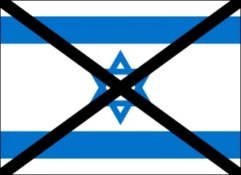 Not content with creating havoc in the U.S. economy, setting Americans against each other, and forcing through a health reform act which has nothing to do with health but everything to do with the redistribution of wealth and an immense increase in governmental interference, our president has now opened a Pandora's Box in the Middle East. It may well usher in a catastrophe not seen since World War 2.
STICK A FORK IN IT OBAMA – YOU’RE DONE!
article from: Angrywhitedude.com
Dear Leader telling Israel how it must be today with his intentional agenda-filled blather… displaying his true colors for all to see world wide-wide in his Mideast Speech today…you can be sure our enemies within and abroad are Happy Campers…especially Iran, the Muslim Brotherhood and all terrorists everywhere.
Dear Leader telling Israel how it must be today with his intentional agenda-filled blather… displaying his true colors for all to see world wide-wide in his Mideast Speech today…you can be sure our enemies within and abroad are Happy Campers…especially Iran, the Muslim Brotherhood and all terrorists everywhere.
Saturday, May 14, 2011
The Geopolitics of Israel: Biblical and Modern
from: Stratfor
The founding principle of geopolitics is that place — geography — plays a significant role in determining how nations will behave. If that theory is true, then there ought to be a deep continuity in a nation's foreign policy. Israel is a laboratory for this theory, since it has existed in three different manifestations in roughly the same place, twice in antiquity and once in modernity. If geopolitics is correct, then Israeli foreign policy, independent of policymakers, technology or the identity of neighbors, ought to have important common features. This is, therefore, a discussion of common principles in Israeli foreign policy over nearly 3,000 years.
The founding principle of geopolitics is that place — geography — plays a significant role in determining how nations will behave. If that theory is true, then there ought to be a deep continuity in a nation's foreign policy. Israel is a laboratory for this theory, since it has existed in three different manifestations in roughly the same place, twice in antiquity and once in modernity. If geopolitics is correct, then Israeli foreign policy, independent of policymakers, technology or the identity of neighbors, ought to have important common features. This is, therefore, a discussion of common principles in Israeli foreign policy over nearly 3,000 years.
Friday, May 6, 2011
If It Is Time To Sell Gold Then Why Are Central Banks Hoarding Gold Like Crazy?
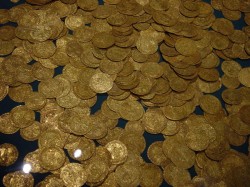
Has the time to sell gold now arrived? Before you start dumping all of your gold, you might want to check out what central banks all over the globe have been doing. There is some serious hoarding of gold that is going on. For most of the past two decades, central banks have been net sellers of gold, but now many of them are gobbling up gold as fast as they can.
Monday, April 18, 2011
Uncle Sam Gets A Shot Across The Bow From Standard & Poors

S&P delivered a stunning downgrade to the US rating this morning to negative that immediately sent the financial markets into panic mode.
Gold surged upon the delivery of the S&P report and at the time of writing this the Dow has plunged 219 points.
To many this news comes a complete shock but my only question is "what took them so long to see the light"? I am going to venture to say that their decision was probably brought about by the recent circus side show over the pathetic budget cuts that both the Democrats and Republicans were so proud about. It looks like S&P can finally see that neither party is taking the runaway government spending seriously.
Sunday, April 17, 2011
NATO Running Out Of Ammunition In Libya "Oil Liberation" Campaign

Where does one even start with this one: US launches air campaign against oil rich country under pretext of humanitarian intervention (while ignoring comparable events in Syria and Iran). US realizes it does not actually use Libyan oil, government runs out of money, hits debt ceiling, leading to decision to pull out of Libya after it is uncovered that CIA operatives had been laying the groundwork for a government overthrow for months, and a scramble to avoid Iraq deja vu ensues. US hands over military campaign to ragtag NATO force led by France. NATO "air superiority" force bombs rebel units; Libyan rebels lose previously held positions and oil wells. Libyan government on verge of repelling US and NATO forces, leading to... NATO runs out of ammunition. There is no point to even comment on this increasingly more surreal chain of events.
Friday, April 1, 2011
The Secret Is Out! Foreign Banks Received The Most TAARP (taxpayer) Money From The Fed
article from: Bloomberg
U.S. Federal Reserve Chairman Ben S. Bernanke’s two-year fight to shield crisis-squeezed banks from the stigma of revealing their public loans protected a lender to local governments in Belgium, a Japanese fishing-cooperative financier and a company part-owned by the Central Bank of Libya.
Tuesday, March 29, 2011
Obama's War
article by: Pat Buchanan
In ordering air and naval strikes on a country that neither threatened nor attacked the United States, did President Obama commit an impeachable act?
So it would seem. For the framers of the Constitution were precise. The power to declare war is entrusted solely to Congress.
From King William's War to Queen Anne's War to King George's War to the Seven Years' War, the colonists had had their fill of royal wars. To no principle were they more committed than that the power to declare war must be separate from the power to wage it.
And Obama usurped that power.
In ordering air and naval strikes on a country that neither threatened nor attacked the United States, did President Obama commit an impeachable act?
So it would seem. For the framers of the Constitution were precise. The power to declare war is entrusted solely to Congress.
From King William's War to Queen Anne's War to King George's War to the Seven Years' War, the colonists had had their fill of royal wars. To no principle were they more committed than that the power to declare war must be separate from the power to wage it.
And Obama usurped that power.
Friday, March 25, 2011
A “Crude” War Against Libya
article by: Doug Hagmann & Joseph Hagmann / http://www.canadafreepress.com/
Without a doubt, Muammar Gaddafi is a despicable human being. He’s a murderous terrorist who gained control of Libya in a September 1969 coup and a socialist dictator who is a sponsor of state terror. But he is not the only dictator who is a sponsor of terror, but simply one of a collection of Arab dictators who routinely kill their own people. As U.S. missiles were being fired into Libya, for example, Yemeni President Ali Abdullah Saleh called out tanks against the protesters of his regime, machine gunning unarmed protesters demonstrating in opposition to his government.
Without a doubt, Muammar Gaddafi is a despicable human being. He’s a murderous terrorist who gained control of Libya in a September 1969 coup and a socialist dictator who is a sponsor of state terror. But he is not the only dictator who is a sponsor of terror, but simply one of a collection of Arab dictators who routinely kill their own people. As U.S. missiles were being fired into Libya, for example, Yemeni President Ali Abdullah Saleh called out tanks against the protesters of his regime, machine gunning unarmed protesters demonstrating in opposition to his government.
Laureates and Leaders

article by: Oliver North
WASHINGTON -- Nobel laureate Barack Obama, fresh from his Latin American spring break, is in serious trouble. Globalists and Utopians who once lauded his constant contrition now want POTUS to return his Peace Prize. Here in Washington, libertarians, progressives and conservatives are outraged that U.S. military forces were committed to combat in Libya without a congressional resolution. The commander in chief's approval ratings are dropping faster than a JDAM. And no matter what happens to Moammar Gadhafi, the turmoil in the Middle East is likely to get a whole lot worse before it gets better. For all of this, President Obama has nobody to blame but himself.
Europe's Libya Intervention: A Special Report
article compliments of: http://www.stratfor.com/
Distinct interests sparked the European involvement in Libya. The United Kingdom and France have issued vociferous calls for intervention in Libya for the past month, ultimately managing to convince the rest of Europe — with some notable exceptions — to join in military action, the Arab League to offer its initial support, and global powers China and Russia to abstain from voting at the U.N. Security Council.
U.S. President Barack Obama said March 21 that the leadership of the U.S.-European coalition against Libya would be transitioned to the European allies “in a matter of days.” While the United States would retain the lead during Operation Odyssey Dawn — intended to incapacitate Tripoli’s command and control, stationary air defenses and airfields — Obama explained that Odyssey Dawn would create the “conditions for our European allies and Arab partners to carry out the measures authorized by the U.N. Security Council resolution.” While Obama pointed out that the U.S.-European intervention in Libya is very much Europe’s war, French nuclear-powered aircraft carrier Charles de Gaulle (R91) and Italian aircraft carrier Giuseppe Garibaldi (551) arrived in waters near Libya, giving Europeans a valuable asset from which to increase European air sortie generation rates and time on station.
Before analyzing the disparate interests of European nations in Libya, one must first take stock of this coalition in terms of its stated military and political goals.
The Military Response to the ‘Arab Spring’
The intervention in Libya thus far has been restricted to the enforcement of a no-fly zone and to limited attacks against ground troops loyal to Libyan leader Moammar Gadhafi in the open. However, the often-understated but implied political goal seems to be the end of the Gadhafi regime. (Some French and British leaders certainly have not shied from stressing that point.)
Europeans are not united in their perceptions of the operation’s goals — or on how to wage the operation. The one thing the Europeans share is a seeming lack of an exit strategy from a struggle originally marketed as a no-fly zone akin to that imposed on Iraq in 1997 to a struggle that is actually being waged as an airstrike campaign along the lines of the 1999 campaign against Serbia, with the goal of regime change mirroring that of the 2001 Afghan and 2003 Iraq campaigns.
Underlying Europeans’ willingness to pursue military action in Libya are two perceptions. The first is that Europeans did not adequately support the initial pro-democratic protests across the Arab world, a charge frequently coupled with accusations that many European governments failed to respond because they actively supported the regimes being challenged. The second perception is that the Arab world is in fact seeing a groundswell of pro-democratic sentiment.
The first charge particularly applies to France — the country now most committed to the Libyan intervention — where Former French Foreign Minister Michele Alliot-Marie vacationed in Tunisia a few weeks before the revolution, using the private jet owned by a businessman close to the regime, and offered then-Tunisian President Zine El Abidine Ben Ali the services of French security forces to suppress the rebellion. Though an extreme example, the French case highlights the close business, energy and often personal relationships Europeans had with Middle Eastern leaders.
In fact, EU states have sold Gadhafi 1.1 billion euros ($1.56 billion) worth of arms between 2004, when they lifted their arms embargo, and 2011, and were looking forward to much more in the future. Paris and Rome, which had lobbied hardest for an end to the embargo, were particularly active in this trade. As recently as 2010, France was in talks with Libya for the sale of 14 Dassault Mirage fighter jets and the modernization of some of Tripoli’s aircraft. Rome, on the other hand, was in the middle of negotiating a further 1 billion euros worth of deals prior to the unrest. British media meanwhile had charged the previous British government with kowtowing to Gadhafi by releasing Abdel Basset Ali al-Megrahi, a Libyan held for the Pan Am Flight 103 bombing. According to widespread reports, the United Kingdom’s Labour government released al-Megrahi so that British energy supermajor BP would receive favorable energy concessions in Libya.
The second perception is the now-established narrative in the West that the ongoing protests in the Middle East are truly an outburst of pro-democratic sentiment in the Western sense. From this, there arises a public perception in Europe that Arab regimes must be put on notice that severe crackdowns will not be tolerated since the protests are the beginning of a new era of democracy in the region.
These two perceptions have created a context under which Gadhafi’s crackdown against protesters is simply unacceptable to Paris and London and unacceptable to domestic public opinion in Europe. Not only would tolerating Tripoli’s crackdown confirm European leaderships’ multi-decade fraternization with unsavory Arab regimes, but the eastern Libyan rebels’ fight against Gadhafi has been grafted on to the narrative of Arab pro-democracy movements seeking to overthrow brutal regimes — even though it is unclear who the eastern rebels are or what their intentions are for a post-Gadhafi Libya.
The Coalition
According to U.N. Security Council resolution 1973, the military objective of the intervention is to enforce a no-fly zone over Libya and to protect civilians from harm across all of Libya. The problem is that the first goal in no way achieves the second. A no-fly zone does little to stop Gadhafi’s troops on the ground. In the first salvo of the campaign — even before suppression of enemy air defenses operations — French aircraft attacked Libyan ground troops around Benghazi. The attack — which was not coordinated with the rest of the coalition, according to some reports — was meant to signal two things: that the French were in the lead and that the intervention would seek to protect civilians in a broader mandate than just establishing a no-fly zone.
Going beyond the enforcement of the no-fly zone, however, has created rifts in Europe, with both NATO and the European Union failing to back the intervention politically. Germany, which broke with its European allies and voted to abstain from resolution 1973, has argued that mission creep could force the coalition to get involved in a drawn-out war. Central and Eastern Europeans, led by Poland, have been cautious in providing support because it yet again draws NATO further from its core mission of European territorial defense and the theater they are mostly concerned about: the Russian sphere of influence. Meanwhile, the Arab League, which initially offered its support for a no-fly zone, seemed to renege as it became clear that Libya in 2011 was far more like Serbia 1999 than Iraq in 1997 — airstrikes against ground troops and installations, not just a no-fly zone. Italy, a critical country because of its air bases close to the Libyan theater, has even suggested that if some consensus is not found regarding NATO’s involvement it would withdraw its offer of air bases so that “someone else’s action did not rebound on us,” according to Italian Foreign Minister Franco Frattini. In reality, Rome is concerned that the Franco-British alliance is going to either reduce Italy’s interests in a post-Ghadafi Libya or fail to finish the operation, leaving Italy to deal with chaos a few hundred miles across the Mediterranean.
Ultimately, enforcing a humanitarian mandate across the whole of Libya via air power alone will be impossible. It is unclear how Gadhafi would be dislodged from power from 15,000 feet in the sky. And while Europeans have largely toed the line in the last couple of days that regime change is not the explicit goal of the intervention, French and British leaders continue to caveat that “there is no decent future for Libya with Gadhafi in power,” as British Prime Minister David Cameron stated March 21, virtually mirroring a statement by Obama. But wishing Gadhafi gone will not make it so.
Endgame Scenarios
With the precise mission of the intervention unclear and exact command and control structures yet to be decided (though the intervention itself is already begun, a summit in London on March 29 will supposedly hash out the details) it is no surprise that Europeans seem to lack a consensus as to what the exit strategies are. Ultimately some sort of NATO command structure will be enacted, even if it is possible that NATO never gives its political consent to the intervention and is merely “subcontracted” by the coalition to make coordination between different air forces possible. Europe's Libya Intervention: Special Series
U.S. military officials, on the other hand, have signaled that a divided Libya between the Gadhafi-controlled west and the rebel-controlled east is palatable if attacks against civilians stop. Resolution 1973 certainly does not preclude such an end to the intervention. But politically, it is unclear if either the United States or Europe could accept that scenario. Aside from the normative issues the European public may have with a resolution that leaves a now-thoroughly vilified Gadhafi in power, European governments would have to wonder whether Gadhafi would be content ruling Tripolitania, a pared-down version of Libya, given that the bulk of the country’s oil fields and export facilities are located in the east.
Gadhafi could seek non-European allies for arms and support and/or plot a reconquest of the east. Either way, such a scenario could necessitate a drawn-out enforcement of the no-fly zone over Libya — testing already war-weary European publics’ patience, not to mention government pocketbooks. It would also require continuous maritime patrols to prevent Gadhafi from unleashing migrants en masse, a possibility that is of great concern for Rome. Now that Europe has launched a war against Gadhafi, it has raised the costs of allowing a Gadhafi regime to remain lodged in North Africa. That the costs are not the same for all participating European countries — especially for Italy, which has the most to lose if Gadhafi retains power — is the biggest problem for creating European unity.
The problem, however, is that an alternative endgame scenario where Gadhafi is removed would necessitate a commitment of ground troops. It is unclear that the eastern rebels could play the role of the Afghan Northern Alliance, whose forces had considerable combat experience such that only modest special operations forces and air support were needed to dislodge the Taliban (or, rather, force them to retreat) in late 2001 through early 2002. Thus, Europe would have to provide the troops — highly unlikely, unless Gadhafi becomes thoroughly suicidal and unleashes asymmetrical terrorist attacks against Europe — or enlist the support of an Arab state, such as Egypt, to conduct ground operations in its stead. The latter scenario seems far-fetched as well, in part because Libyans historically have as much animosity toward Egyptians as they do toward Europeans.
What ultimately will transpire in Libya probably lies somewhere in between the extreme scenarios. A temporary truce is likely once Gadhafi has been sufficiently neutralized from the air, giving the West and Egypt sufficient time to arm, train and support the rebels for their long march to Tripoli (though it is far from clear that they are capable of this, even with considerable support in terms of airpower, basic training, organization and military competencies). The idea that Gadhafi, his sons and inner circle would simply wait to be rolled over by a rebel force is unlikely. After all, Gadhafi has not ruled Libya for 42 years because he has accepted his fate with resignation — a notion that should worry Europe’s governments now looking to end his rule.
Distinct interests sparked the European involvement in Libya. The United Kingdom and France have issued vociferous calls for intervention in Libya for the past month, ultimately managing to convince the rest of Europe — with some notable exceptions — to join in military action, the Arab League to offer its initial support, and global powers China and Russia to abstain from voting at the U.N. Security Council.
U.S. President Barack Obama said March 21 that the leadership of the U.S.-European coalition against Libya would be transitioned to the European allies “in a matter of days.” While the United States would retain the lead during Operation Odyssey Dawn — intended to incapacitate Tripoli’s command and control, stationary air defenses and airfields — Obama explained that Odyssey Dawn would create the “conditions for our European allies and Arab partners to carry out the measures authorized by the U.N. Security Council resolution.” While Obama pointed out that the U.S.-European intervention in Libya is very much Europe’s war, French nuclear-powered aircraft carrier Charles de Gaulle (R91) and Italian aircraft carrier Giuseppe Garibaldi (551) arrived in waters near Libya, giving Europeans a valuable asset from which to increase European air sortie generation rates and time on station.
Before analyzing the disparate interests of European nations in Libya, one must first take stock of this coalition in terms of its stated military and political goals.
The Military Response to the ‘Arab Spring’
The intervention in Libya thus far has been restricted to the enforcement of a no-fly zone and to limited attacks against ground troops loyal to Libyan leader Moammar Gadhafi in the open. However, the often-understated but implied political goal seems to be the end of the Gadhafi regime. (Some French and British leaders certainly have not shied from stressing that point.)
Europeans are not united in their perceptions of the operation’s goals — or on how to wage the operation. The one thing the Europeans share is a seeming lack of an exit strategy from a struggle originally marketed as a no-fly zone akin to that imposed on Iraq in 1997 to a struggle that is actually being waged as an airstrike campaign along the lines of the 1999 campaign against Serbia, with the goal of regime change mirroring that of the 2001 Afghan and 2003 Iraq campaigns.
Underlying Europeans’ willingness to pursue military action in Libya are two perceptions. The first is that Europeans did not adequately support the initial pro-democratic protests across the Arab world, a charge frequently coupled with accusations that many European governments failed to respond because they actively supported the regimes being challenged. The second perception is that the Arab world is in fact seeing a groundswell of pro-democratic sentiment.
The first charge particularly applies to France — the country now most committed to the Libyan intervention — where Former French Foreign Minister Michele Alliot-Marie vacationed in Tunisia a few weeks before the revolution, using the private jet owned by a businessman close to the regime, and offered then-Tunisian President Zine El Abidine Ben Ali the services of French security forces to suppress the rebellion. Though an extreme example, the French case highlights the close business, energy and often personal relationships Europeans had with Middle Eastern leaders.
In fact, EU states have sold Gadhafi 1.1 billion euros ($1.56 billion) worth of arms between 2004, when they lifted their arms embargo, and 2011, and were looking forward to much more in the future. Paris and Rome, which had lobbied hardest for an end to the embargo, were particularly active in this trade. As recently as 2010, France was in talks with Libya for the sale of 14 Dassault Mirage fighter jets and the modernization of some of Tripoli’s aircraft. Rome, on the other hand, was in the middle of negotiating a further 1 billion euros worth of deals prior to the unrest. British media meanwhile had charged the previous British government with kowtowing to Gadhafi by releasing Abdel Basset Ali al-Megrahi, a Libyan held for the Pan Am Flight 103 bombing. According to widespread reports, the United Kingdom’s Labour government released al-Megrahi so that British energy supermajor BP would receive favorable energy concessions in Libya.
The second perception is the now-established narrative in the West that the ongoing protests in the Middle East are truly an outburst of pro-democratic sentiment in the Western sense. From this, there arises a public perception in Europe that Arab regimes must be put on notice that severe crackdowns will not be tolerated since the protests are the beginning of a new era of democracy in the region.
These two perceptions have created a context under which Gadhafi’s crackdown against protesters is simply unacceptable to Paris and London and unacceptable to domestic public opinion in Europe. Not only would tolerating Tripoli’s crackdown confirm European leaderships’ multi-decade fraternization with unsavory Arab regimes, but the eastern Libyan rebels’ fight against Gadhafi has been grafted on to the narrative of Arab pro-democracy movements seeking to overthrow brutal regimes — even though it is unclear who the eastern rebels are or what their intentions are for a post-Gadhafi Libya.
The Coalition
According to U.N. Security Council resolution 1973, the military objective of the intervention is to enforce a no-fly zone over Libya and to protect civilians from harm across all of Libya. The problem is that the first goal in no way achieves the second. A no-fly zone does little to stop Gadhafi’s troops on the ground. In the first salvo of the campaign — even before suppression of enemy air defenses operations — French aircraft attacked Libyan ground troops around Benghazi. The attack — which was not coordinated with the rest of the coalition, according to some reports — was meant to signal two things: that the French were in the lead and that the intervention would seek to protect civilians in a broader mandate than just establishing a no-fly zone.
Going beyond the enforcement of the no-fly zone, however, has created rifts in Europe, with both NATO and the European Union failing to back the intervention politically. Germany, which broke with its European allies and voted to abstain from resolution 1973, has argued that mission creep could force the coalition to get involved in a drawn-out war. Central and Eastern Europeans, led by Poland, have been cautious in providing support because it yet again draws NATO further from its core mission of European territorial defense and the theater they are mostly concerned about: the Russian sphere of influence. Meanwhile, the Arab League, which initially offered its support for a no-fly zone, seemed to renege as it became clear that Libya in 2011 was far more like Serbia 1999 than Iraq in 1997 — airstrikes against ground troops and installations, not just a no-fly zone. Italy, a critical country because of its air bases close to the Libyan theater, has even suggested that if some consensus is not found regarding NATO’s involvement it would withdraw its offer of air bases so that “someone else’s action did not rebound on us,” according to Italian Foreign Minister Franco Frattini. In reality, Rome is concerned that the Franco-British alliance is going to either reduce Italy’s interests in a post-Ghadafi Libya or fail to finish the operation, leaving Italy to deal with chaos a few hundred miles across the Mediterranean.
Ultimately, enforcing a humanitarian mandate across the whole of Libya via air power alone will be impossible. It is unclear how Gadhafi would be dislodged from power from 15,000 feet in the sky. And while Europeans have largely toed the line in the last couple of days that regime change is not the explicit goal of the intervention, French and British leaders continue to caveat that “there is no decent future for Libya with Gadhafi in power,” as British Prime Minister David Cameron stated March 21, virtually mirroring a statement by Obama. But wishing Gadhafi gone will not make it so.
Endgame Scenarios
With the precise mission of the intervention unclear and exact command and control structures yet to be decided (though the intervention itself is already begun, a summit in London on March 29 will supposedly hash out the details) it is no surprise that Europeans seem to lack a consensus as to what the exit strategies are. Ultimately some sort of NATO command structure will be enacted, even if it is possible that NATO never gives its political consent to the intervention and is merely “subcontracted” by the coalition to make coordination between different air forces possible. Europe's Libya Intervention: Special Series
U.S. military officials, on the other hand, have signaled that a divided Libya between the Gadhafi-controlled west and the rebel-controlled east is palatable if attacks against civilians stop. Resolution 1973 certainly does not preclude such an end to the intervention. But politically, it is unclear if either the United States or Europe could accept that scenario. Aside from the normative issues the European public may have with a resolution that leaves a now-thoroughly vilified Gadhafi in power, European governments would have to wonder whether Gadhafi would be content ruling Tripolitania, a pared-down version of Libya, given that the bulk of the country’s oil fields and export facilities are located in the east.
Gadhafi could seek non-European allies for arms and support and/or plot a reconquest of the east. Either way, such a scenario could necessitate a drawn-out enforcement of the no-fly zone over Libya — testing already war-weary European publics’ patience, not to mention government pocketbooks. It would also require continuous maritime patrols to prevent Gadhafi from unleashing migrants en masse, a possibility that is of great concern for Rome. Now that Europe has launched a war against Gadhafi, it has raised the costs of allowing a Gadhafi regime to remain lodged in North Africa. That the costs are not the same for all participating European countries — especially for Italy, which has the most to lose if Gadhafi retains power — is the biggest problem for creating European unity.
The problem, however, is that an alternative endgame scenario where Gadhafi is removed would necessitate a commitment of ground troops. It is unclear that the eastern rebels could play the role of the Afghan Northern Alliance, whose forces had considerable combat experience such that only modest special operations forces and air support were needed to dislodge the Taliban (or, rather, force them to retreat) in late 2001 through early 2002. Thus, Europe would have to provide the troops — highly unlikely, unless Gadhafi becomes thoroughly suicidal and unleashes asymmetrical terrorist attacks against Europe — or enlist the support of an Arab state, such as Egypt, to conduct ground operations in its stead. The latter scenario seems far-fetched as well, in part because Libyans historically have as much animosity toward Egyptians as they do toward Europeans.
What ultimately will transpire in Libya probably lies somewhere in between the extreme scenarios. A temporary truce is likely once Gadhafi has been sufficiently neutralized from the air, giving the West and Egypt sufficient time to arm, train and support the rebels for their long march to Tripoli (though it is far from clear that they are capable of this, even with considerable support in terms of airpower, basic training, organization and military competencies). The idea that Gadhafi, his sons and inner circle would simply wait to be rolled over by a rebel force is unlikely. After all, Gadhafi has not ruled Libya for 42 years because he has accepted his fate with resignation — a notion that should worry Europe’s governments now looking to end his rule.
Thursday, March 24, 2011
China Flexes Its Military Muscle

In case you missed the news report a few days ago about the Chinese frigate that appeared off the coast of Libya I thought I would post a video of it.
What is odd is the fact that this is the first time in history that a Chinese warship has sailed in the Mediterranean. What was even more odd is the fact that CNN was the only mainstream news outlet that I found that reported on this. Apparently the other networks do not see the significance of this event.
THE WEST AND ITS TWISTED LANGUAGE OF WAR
By Patrick Henningsen
21st Century Wire
March 24, 2011
Received wisdom often states that if you understand history and apply it to the present day, you stand a better chance of not making the same mistake twice. It’s also true that the victors write the history of world events- one of the spoils of war we are told. But after decades of changing the language of modern war and its recent history, all those old lessons are becoming buried under a heap of customised propaganda and legalese.
21st Century Wire
March 24, 2011
Received wisdom often states that if you understand history and apply it to the present day, you stand a better chance of not making the same mistake twice. It’s also true that the victors write the history of world events- one of the spoils of war we are told. But after decades of changing the language of modern war and its recent history, all those old lessons are becoming buried under a heap of customised propaganda and legalese.
Libya's Terrorism Option
By Scott Stewart / Stratfor.com
On March 19, military forces from the United States, France and Great Britain began to enforce U.N. Security Council Resolution 1973, which called for the establishment of a no-fly zone over Libya and authorized the countries involved in enforcing the zone to “take all necessary measures” to protect civilians and “civilian-populated areas under threat of attack.” Obviously, such military operations cannot be imposed against the will of a hostile nation without first removing the country’s ability to interfere with the no-fly zone — and removing this ability to resist requires strikes against military command-and-control centers, surface-to-air missile installations and military airfields. This means that the no-fly zone not only was a defensive measure to protect the rebels — it also required an attack upon the government of Libya.
On March 19, military forces from the United States, France and Great Britain began to enforce U.N. Security Council Resolution 1973, which called for the establishment of a no-fly zone over Libya and authorized the countries involved in enforcing the zone to “take all necessary measures” to protect civilians and “civilian-populated areas under threat of attack.” Obviously, such military operations cannot be imposed against the will of a hostile nation without first removing the country’s ability to interfere with the no-fly zone — and removing this ability to resist requires strikes against military command-and-control centers, surface-to-air missile installations and military airfields. This means that the no-fly zone not only was a defensive measure to protect the rebels — it also required an attack upon the government of Libya.
Wednesday, March 23, 2011
Libya: Does Anyone Really Want To Help Them?
Article by: The Warning Signs
It has been less than a week since the United Nations Security Council voted to intervene in Libya which in turn quickly brought about air strikes on key installations, the launching of 110 tomahawk cruise missiles and the airspace over Libya declared a no fly zone.
But now, just five days into the fight, it appears the wheels are coming off the cart.
It has been less than a week since the United Nations Security Council voted to intervene in Libya which in turn quickly brought about air strikes on key installations, the launching of 110 tomahawk cruise missiles and the airspace over Libya declared a no fly zone.
But now, just five days into the fight, it appears the wheels are coming off the cart.
Tuesday, March 22, 2011
The Fog Of War At 1600 Pennsylvania Avenue

by David Rothkopf
The White House clearly has a problem on its hands. The launch of the military intervention with Libya has been messy at best. The fog of war is supposed to be restricted to the battlefield, but for the moment it seems to have settled in over the White House. Here are just a few of the contradictions and confusions swirling about at the moment:
Saturday, March 19, 2011
The Libyan War of 2011

Subscribe to:
Comments (Atom)